Saturday, March 19, 2011

Questioning My Principles

Wax tablet book

Would it really be that bad to change? Times are different, after all. And even if I adopted a more modern approach, I'd never abandon my old truth: I love reading books.

Bronze book

Maybe if I break that sentence into two phrases I could discover a new truth. I love reading, and I love books.

As far as reading: I'll read the minuscule writing explaining my new prescription's side-effects; I read cereal boxes and instruction manuals for things I don't own any more. So loving to read can be separate from loving books. After all, if this bronze-covered book was sitting on my desk, I'd try to read it. But I wouldn't be tucking it in my purse to peruse during a pedicure.

The Book of Darius

The rough stone box would disqualify this as a coffee-table book, although I'd be dying to find comparisons to The Book of Mormon.


Ancient Greek Scroll

And this one might be trouble when I'm sitting in the window seat of my Delta flight.

I guess I've already adapted to modern technology. But can take the next step?
A friend of mine asked:

To Kindle or Not to Kindle?

And that's my question to you.

You know me and mine:
  1. We love bookstores.
  2. Dee repairs old books.
  3. We write and design books.

Could we hold our bookish heads high and still carry a Kindle?

I'm anxious for your advice.
Answer any or all questions, or just a yay or nay for getting one.

Is it hard to learn to use one?
Is it worth the price?
Which is the best kind? Why?
Can you use them on an airplane?
Do you need free wi-fi to make a connection everywhere you want to read?
About how much does it cost?
Does it cost to use it?
Would an iPad be a better purchase?
Pros? Con?

What do you know that I don't know?

PLEASE COMMENT!


Friday, March 18, 2011

Historic Confession

I knitted this sweater in 1962.

Twice today I was reminded of Mr. Neff, my seventh grade history teacher. In a roundabout way, he might be responsible for me becoming a writer.

I was a new teenager, excited to learn the important facts of life, and third period was where putting on makeup was taught. While Mr. Neff droned on about Father Escalante and his Spanish explorers, the girls hid behind desks propped open with mirrors and applied turquoise eyeshadow and white lipstick. Occasionally someone was caught, and Mr. Neff hauled her to the front of the class (by the ear) and drew a little circle on the blackboard where she had to put her nose. Mostly, though, he was lost in his own 18th century world.

Our entire grade was based on The Report. Rather than hand in homework every day, we put our assignments in a folder to keep until the end of the term. The first few months I was fairly diligent and when the time came, I got a B+ on my report. Not too shabby for shoddy writing. We had to take it home, have a parent sign it, and hand it back in to Mr. Neff.

Unfortunately, the second term corresponded with a lot of important stuff in my life—Mom said if I licked all her S & H green stamps and put them in books, I could use them to get a clock radio. History homework took a back seat. I planned to catch up over Christmas, but that was the year I learned to play Nertz and it took all my vacation time. When the due date came, I didn't hand in a report.

Uh-oh. It dawned on me that I was going to get an F and I realized Dad wouldn't appreciate my expertise with a mascara wand. Suddenly history became real to me. The guillotine was about to fall and I was Anne Boleyn. The terrors of the Spanish Inquisition would take place in my house with me as victim. How could I have let this happen? Would I be standing at the blackboard with my nose in a circle the rest of the year?

It was the day before grades came out when Mr. Neff passed back the reports. Red-faced with shame, I was hiding inside my desk when he called "Martha Bagley" and handed me a folder. What? This was too good to be true! Had someone done my homework anonymously? Had Father Escalante sent me a miracle?

When I opened the report I saw an A- circled in red with a little note that said, "Good writing!" I read a few paragraphs before I recognized my work. Thumbing to the back page I saw my mom's signature next to last term's B+. Mr. Neff had graded my old report for a second time and improved my score!

I wish this story had a better ending. I didn't do the honest thing. I celebrated my good luck, and took my unearned grade triumphantly home to my proud parents, secretly sneering at Mr. Neff. Isn't it interesting, though, that I still remember my guilt vividly after almost fifty years?
I also remember that he complimented my writing.


Do you have something you'd like to confess?
Write a story from your childhood that shows your colorful side.


Thursday, March 17, 2011

Turning Bad Luck Into Good


"It's not what happens to you, but how you react to it that matters."
—Epictetus

Follow your rainbow . . .
Harry Potter's mother (J. K. Rowling) gave a speech at
Harvard's 2008 Graduation.
Click here for a message as good as gold!

Wednesday, March 16, 2011

Guardian Angels


Thank Goodness!
Somebody up there's listening to my woes and spreading the news.
Today I've forgotten for hours at a time that I'm miserable.
Maybe I've graduated to just uncomfortable!
I can live with that, especially if it's followed by OK.
I've reached an age where feeling OK is usually as good as it gets.
I'm bubbling over with hope for a restored sense of,
"I got stuff to do!" and then heading off to do it.

I guess if God is blessing me to get better,
I have a responsibility to be better.
I'll give that a little thought—tomorrow when I'm more better.

In the meantime, thanks for your support, your compassion and your understanding.
Little email get-well notes dinged on my computer throughout the days. You are good
bloggy buddies. The best!

"In every thing give thanks; for this is the will of God concerning you."
—I Thess. 5:18

Thank you!


Tuesday, March 15, 2011

Shingle Story

Peaches

Our house was built on the mountain and a deck in the backyard hung out over a cliff. Peaches played tag with the quail that lived under the deck, and would often come home with weeds and leaves tangled in her luxurious fur coat. It made me mad.

One day she came home crying—her stomach was covered with little sticky burrs. It served her right, I thought. She shouldn't have been under the deck again.

I took her to the groomers, hoping they could somehow brush them out. When I went to pick her up a few hours later, I didn't even recognize the poor pooch. The stickers were too entwined to comb them out, so the groomer had shaved her bare. Her naked belly had vivid red scratches from the thorns, and she trembled in the air-conditioned car, frightened and embarrassed. I pitied her and tossed her a bone.

Peaches was lucky—her stickers were poking from the outside, and could be snipped off. I feel like a thousand little needles are stabbing my stomach from the inside. Shingles is an inflammation of the nerve endings and I had no idea how many we have. Billions it seems.

The moral of my story is this: When a puppy acts poopy, toss her a bone. She might have a burr in her belly.


♫ No-body knows the trouble I've seen . . .


Monday, March 14, 2011

What If You'd Married What's-His-Name?

Mary Engelbreit

An excerpt from
Son of a Gun
by
Marty Halverson

Ruby sat by the window and considered her reflection in the September twilight.
Streaks of sunset polished her skin, and caught her hair on fire. Where would she be tonight if not for Leo?
Leo lived in that rare grace of self that could keep his identity in tact through any ordeal. He did not depend on outward props to shore himself up; heartache, circumstance and violence could not eradicate the moral, gentle habits of his upbringing. Jack had been a mirage. Leo had been a well, hardly visible from a distance but with the depth and purity to restore her. Ruby hardly ever thought of those ugly days anymore. Leo had broken off that part of her life like he would the wormy end of a piece of corn. When it was gone, it was forgotten and he just saw the golden, fresh promise she held inside.

Admit it: old What's-His-Name was just a mirage. Think of one word that describes what you missed out on by dumping him. I'll go first: TROUBLE.

What five words describe the life you have (or the life you want) with your true love. I'll go first:
  1. Fun
  2. Unique
  3. Educational
  4. Intriguing
  5. Memorable
Aren't you relieved you didn't end up with a dork?:


Now it's your turn~

Write down why you're glad you're with the guy you're with. Someday in the future someone will want to know. (And someday in the present, you might need a reminder, yourself!) I've written many such love letters; click here for one of my favorites.


Friday, March 11, 2011

Recurring Childhood Illnesses


I'm an itchy b---- (babe) tonight. Apparently the chickenpox I had when I was eight haven't forgotten how to make me miserable. They came to visit again in the form of shingles. A tiny rash on my side is suddenly a giant pain!

The doc said he was glad I came to see him early in my suffering (this virus can last six weeks!) because there's an anti-viral Rx that could shorten my torment. I hope so—it cost me $108!

I was eight when I broke out in chickenpox the first time. Aunt Ree was tending me for the weekend. She dumped boxes of soda in my bath, and coated me with sticky pink lotion that dried into coral colored clay. I still remember trying to levitate on the couch so nothing would touch the cracked pink coating. "Don't scratch; you'll get a scar," I was told as I dug into my itchy pox.

We heal from most ordeals of childhood, but I bet all of us have a few scars of one kind or another. Maybe someone said, "You are so awkward," or "You'll never amount to anything," or "You're not an athlete," and left a sore spot that still flares up from time to time. Moms have a huge role in this kind of childhood trauma. It's contagious, and spreads by word of mouth.

"Think over everything you say, and don't say everything you think" is good preventative care. The Rx is most effective if it's started early in motherhood, although it works even in small doses over time. It's costly, though. You sacrifice the brief buzz of getting it all off your chest, by saying it like it is. You miss the split-second surge, knowing your cutting remark hit the bone. (A positive side-effect is less craving for those self-serving thrills.)

In a fabulous talk called The Tongue of Angels Jeffrey Holland said,
We must be so careful in speaking to a child. What we say or don’t say, how we say it and when is so very, very important in shaping a child’s view of himself or herself . . . Be constructive in your comments to a child—always. Never tell them, even in whimsy, that they are fat or dumb or lazy or homely. You would never do that maliciously, but they remember and may struggle for years trying to forget—and to forgive. And try not to compare your children, even if you think you are skillful at it. You may say most positively that “Susan is pretty and Sandra is bright,” but all Susan will remember is that she isn’t bright and Sandra that she isn’t pretty. Praise each child individually for what that child is, and help him or her escape our culture’s obsession with comparing, competing, and never feeling we are “enough.”

Even intentional mothers might notice themselves using words that would earn a time-out in their own home (more likely the kids will notice it for their mothers.) This is the time to try Aunt Ree's old-fashioned remedy. Go take a bubbly soda-bath, coat yourself in perfumed pink lotion, have a nice long think about the mom you want to be. Re-emerge from your mini-spa treatment and say something nice to each kid, tell a funny story, and find a reason to laugh. Post traumatic stress syndrome will be averted, and a healing atmosphere will fill the home.

Amy in the sick bed, 1985

Childhood illnesses could be a fond memory of sleeping in mom's bed, eating breakfast on a tray, and keeping a colorful throw-up bowl at the ready. It's a chance to play nurse and hospital, and teach your kids how to treat you next time you're sick. They'll love the foot-rub and be experts when you want one after a day at the zoo.

If you do all this to your best ability, and your chickenpox still returns as a pain in the assets, (when you're old and don't deserve it,) you have my permission to be an itchy b---- (babe.)
At that point you're teaching "Lessons in Reality."


Your turn:
It's your big chance—
gripe about how miserable you feel!

(I'll totally understand.)


Use some alliteration, stick in a little joke or two, and create an image.


Thursday, March 10, 2011

Matryoshka: The Women Within

This is who I intentionally set out to be!

Matriarch of a big peasant family,
colorful, kerchiefed, round and rosy-cheeked—
who could represent me better?

I started collecting nesting dolls a long time ago. Made in Russia, their real name is Matryoshka, from a word that means Mother. They are sometimes called Babushka dolls, which I like, too, because it means Grandmother.

There are lots of different themes and designs, and I love seeing how the artists from various villages paint them so meticulously. My grandkids love taking the dolls apart to reveal smaller dolls fitting inside one another.

When my granddaughters turn eight, I give them one to keep. The big doll represents her, her mom is next, and I am after that, with generations of grandmothers and great-grandmothers, back and back and back, who all want her to be happy.

A letter is part of the gift, listing all the names and something unique about each one: Chloe loves to write, Amy loves to draw, Marty loves to read, June loved to sew, Adelila loved to cook, Emily loved her garden. I tell my eight-year-old that they were loved by these women long before they were even born. If they could, they would share the lessons they have learned about life with their posterity. "But you have traits of each of them carried right inside your mind and heart. It's called heredity!"


Art by Kathryn Brown

I hope my little girls can someday realize the blessing of being Matryoshka and Babushka. It has become more challenging to make this choice.

Bryce Christensen said, "Too many women have succumbed to a dangerously narrow view of womanhood, repudiating homemaking itself as an outmoded and dispensable artifact of a misguided culture." In his article Homeless America, he states that women's traditional skills have lost their value. "By rejecting a role differentiation between fathers and mothers, some women have lost sight of the home as an independent moral realm, building relationships and values that are different from those of the commercial realm." (This is a great article I've referred to often on my blog. It's long, but interesting.)

Some attitudes in our society are wrong. I hope my little granddaughters will recognize the great lies listed here:
  1. Men are smarter, have all the power and are more important, so if we want to have influence in the world we should be more like them.
  2. Marriage and family are confining.
  3. Motherhood is menial and a waste of any talented woman's time.
  4. Women are perpetually frazzled and failing.
  5. A woman's value is based on her size, shape, and what she accomplishes outside the home.
--from a talk by Sheri Dew

Some truths I hope my girls will learn from the legacy of their mothers and grandmothers:
  1. By developing the God-given nature to nurture, women have a unique opportunity to change the world.
  2. The influence of a mother has no limit and no end. She can share every aspect of her education and experience in the atmosphere of love she fashions.
  3. Creating a home is a way of creating a world.
  4. Women have abilities beyond their wildest dreams to organize and create.
  5. Women are the soul of a family and a community.
It's been said that women are the survival kit of the human race. That responsibility has been handed down from generation to generation.


I think it's something inside us!

Now it's your turn~

Comment, blog, or think about these questions:
  1. What is the main responsibility of a mother?
  2. What was your decision to be a mother, or not to be a mother, based on?
  3. How do you think the role of motherhood has changed since you were a child?
  4. Is that good or bad?
  5. How do you feel about the role of motherhood personally?

Write down how you feel about the big questions for your posterity. What's written down becomes the history future generations will search for. Let your story be part of their understanding.


Wednesday, March 9, 2011

Intentional Mothering: Pajama Party

Polly, Tommy, Marty 1955

Kim came up with a unique solution to a common problem. Her husband worked long hours and always came home late. Usually the kids were already in bed. Family dinners never happened. Kim resented him thwarting her noble intentions, and he resented her resentment.

"My hours aren't flexible!" he told her. "I'm doing this for our family!"

"I am, too," she countered. "Can't you change your schedule around to make more time for us?" she pleaded after one argument.

"Can't you?" he asked. So she did.

That week they started a new family routine. Kim gave the kids a light supper, and they went to bed at 7:pm on the dot. When her husband came home at 9 or later, she woke them up for a pajama party. They loved it!

The whole family ate dinner together, Dad got caught up on their activities, played a little, read them a story and tucked them back in bed.

It took a few weeks for the kids to adjust to the time change, but the mom was persistent. Time together as a family was worth the effort. This became their daily schedule for several years.

Now, each of their adult children looks back on that time as memorable -- the Pajama Party years. Kim thought outside the box to meet her priorities, and came up with a plan to strengthen her family.

Do you need to tweak your schedule to meet your goals?

Do you know someone who thinks outside the box to reach priorities?

Share your ideas in the comment section!


(Thanks for your example, Kim!)


Tuesday, March 8, 2011

How to Connect With a Teenage Son

My Three Sons, 1983

Every Friday night at midnight I made chocolate chip cookies. Curfew was 12:30 and walking into a kitchen with the warm aroma of melted chocolate, and a waiting bowl of cookie dough was too much for a teenage boy to resist. It was a delicious way to start a conversation!


Monday, March 7, 2011

Intentional Motherhood

Micah, Josh, Amy and Heidi, 1978

I was an intentional mother—I knew what I wanted to have happen and I thought of ways to make it happen. (And then I thought again.) Here is an example.

My father-in-law worked shifts at Geneva Steel Plant, so Dee used his terminology to dub the hectic part of my day the Swing Shift. Rest time was from noon to two—whether the little kids napped or not they were tucked away for a quiet time so I could restore myself. (I'll admit that sometimes they were locked, rather than tucked; and sometimes it was riot time rather than quiet time.) The swinging part started an hour later and I was ready. After-school snacks were ready on the counter, my projects were set aside and my nerves were steeled.

At 3:10 I opened the front door with a smile on my face. "How was your day, Josh?" I asked my second grader as he shed his coat, boots, backpack and papers in a heap at my feet. He glanced up at me like I was a stranger and mumbled "OK" and headed straight for the food.

Gabi burst into tears as she shoved him through the door. "You always ask him first! You never ask me!" she complained. "How was your day, Gabi?" I asked, with a tad less cheerfulness. She erupted in tears. "You didn't sign my spelling! Miss Strasser said I couldn't get a star by my name because you didn't sign my spelling!" She tripped over Josh's boots, noticed Amy holding her Barbie and smacked her as she grabbed the doll. Three-year-old Amy had also planned this afternoon encounter, and was shrieking before the doll even left her arms. (They each had their parts memorized.)

Micah wailed in the family room when Josh commandeered the TV. Right on cue, the doorbell rang. Amy pulled the door opened and Walter, our silent, 5-year-old neighbor walked in without waiting for an invitation. He was an only child, and his mom said he needed to play. At our house.

Carolyn was on the phone, "Can you take the girls to dance? I've got sick kids."

It had taken five minutes. The kid's paraphernalia was all over the floor, the kitchen counter was covered with wrappers, coated with crumbs, a wrinkled spelling paper stuck to the surface with drips of apple juice, and five children were glued to the vibrating sounds of Electric Company.

There was evidence in the air that Heidi was awake needing a diaper change, and ballet started in half-an-hour. That meant searching for shoes, sending Walter home, picking up Carolyn's car pool, and then watching my kids and a dozen others fight for a turn on the dance teacher's trampoline for an hour. Heidi was too little for the tramp so she bounced on my pregnant belly, while I entertained her with finger-plays and nursery rhymes.

Somehow bonding time had turned into bondage time, so I thought it through again. I had to be in control of the Swing Shift. These were important hours when I could have a positive influence on my kids, and I didn't want to give those hours away to chaos or peer pressure. Here's what I did:

At least twice a week I hung a little sign on our front door that said Halverson Hero Happening! That meant we were having a family after-school party (no friends allowed. Sorry Walter.) Just by naming it, I had made it special. Then, I acted excited! "Hi guys! Did you remember we're having a Happening?" They behaved better because of my enthusiasm. I directed them to hurry and hang up their coats, give me their papers, etc. "Quick! We have activities planned!" First we'd go to the Treat Cafe (normal after-school snacks served by mom acting like a waitress. I'd recite the menu and they'd place their order while they sat at the counter like customers.) With the phone off the hook and a sign on the door that said "We're busy today," we had time to chat.

Then we had Games:

Minute Reports—the timer was set for one minute and each kid had a turn to tell as many things as they could about their day. Someone watched the timer and someone kept track.

Story Time—
We'd sit on the floor in a circle and I'd tell a story about my day, or about an upcoming holiday, or a story with a moral, or a funny story, or we'd tell knock-knock jokes. Something fun.

Homework Hop
—each kid had to hop on one foot for as long as it took to tell what their homework was.

Laundry Prize—each kid put away their laundry and would find a piece of bubble gum, or a lollipop at the bottom of their individual basket. It was a race to get back to the family room first.

Chore Challenge
—each kid drew a chore from a hat and had five minutes to do it well, and return and sit down. Then we'd all inspect each chore and decide if it passed inspection. If it did, the kid got a star on the job chart.

Talent Showoff
—each kid performed something they were supposed to practice (a piano piece, a violin solo, a gymnastics trick, a multiplication table) and we all clapped.

Free Time—
I assigned partners or trios of kids to invent an activity, which they could play together as long as they didn't bother another partnership. When the inevitable melt-down came, I'd gather the group again and they'd all report on their activity. By then the magic of the Happening had dissipated and we'd break up into homework, practicing, TV, whatever til dinner time.

Happenings met all our needs. The kids wanted my full attention after school. When they got it, they behaved. I wanted their full attention after school and when I got it, I behaved. The whole afternoon went smoother. (To be totally honest, this did not work all the time. But it worked enough of the time for me to call it successful.)

The kids had to deal with peer pressure—telling Walter and other friends they couldn't come play was embarrassing. I had my own peer pressure: telling Carolyn and other friends "I've reserved this time for my kids," was hard for me. I consolidated lessons as much as possible so we'd have a couple of unpressured afternoons a week; sometimes I bagged lessons altogether for a season in favor of a less chaotic home life. (Everyone grew up with a talent or two that they still use in adulthood.)

This week I'll be giving some other examples of Intentional Mothering. Motherhood was a career choice for me, not something on the side. Because I viewed it this way, I could excuse the parts I wasn't thrilled about—every career has its downsides—and concentrate my efforts where my personal talents and interests lay.

"The greatest aid to adult education is children."
—Charlie T. Jones


Have you got some after-school tips?


Friday, March 4, 2011

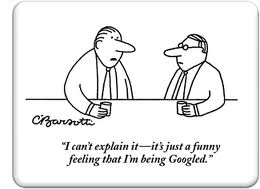
Have You Been Googled?

Teacher Feature

Wondering how somebody finds your blog?

If somebody googles:
  • "Anne Frank"
  • "Toys at Grandma's House"
  • "Mother Goose Costume"
  • "Lifesavers"
  • "Paper Bag"
  • "Punctuation"
  • "Miles Goodyear Cabin"
and a bunch of others, my blog is listed on the first page of the Google Search Results. They are pretty random topics, and I don't know why they have made the big time, but it gives me a total thrill! Every once in a while I get an email from somebody saying they wrote a paper on Miles Goodyear and used my post, or used my Anne Frank post to teach their history class. It's pretty fun!

My posts never get tons of comments (thank you to everyone who does comment) but lots of people read them. My advice:
Never judge your readership by the number of comments!

Here are two ways I've figured out to see if anybody's reading. (There are probably more accurate ways but I don't know them.)


This is how I track using my Blogger account:
  1. On my blog I click on New Post (as if I'm writing a new post.)
  2. Across the top there are little tabs: Posting, Comments, Settings . . . Stats
  3. Click on Stats.
  4. There is a list of Popular Posts, telling how many page views they've had.
  5. At the top I can click on Now/Day/Week/Month/All Time.
  6. When I click on All Time, I can see how many times someone has been to that particular page.
  7. I wonder why, and try to figure out what works and what doesn't. I give up.
  8. Then I explore and click on everything in there.
This is how I find out using New Stat Counter:
  1. You'll have to google New Stat Counter and join up. I can't remember how to do this, but it must be easy because I did it. I don't have a fancy account I have to pay for. The free one is fine for me.
  2. In New Stat Counter there are features down the side. I click on Key Words. That tells me what key words people googled that led them to my blog post.
  3. Clicking on Popular Pages tells me how many times someone has visited a certain page. I can click on daily/weekly/monthly, etc. at the top and it gives me the statistics.
To see where the post was ranked, I typed the key words into Google and read down the first page of listings. Try it! You might be pleasantly surprised!


Thursday, March 3, 2011

How Do You Google?


A while ago I wrote a random post called A Letter to My Grandkids: Anne Frank's Diary. It's been googled 25,000 times! I get emails about it almost every day. What makes a post catch fire?


Wednesday, March 2, 2011

Son of a Gun: Editor's Notes

Excerpt from
Son of a Gun
by
Marty Ann Halverson

After Ruby and the babies were sleeping in the wagon under a
mountain of quilts, Leo found Turk hunkered down before the fire smoking a
cigar. The light made plain the long, half-bitter lines of the man’s face, the
thin pressure around the lips.

Turk was near sixty, small, tough and wiry, showing the knocks of life.
He had ash-white hair and the steadiest brown eyes Leo had ever noticed in a
man. His language was colorful, with a southern twang, and, because Ruby
did, Leo trusted him instantly without reservation.

“Night-owling,” Turk said. “Nothing like a prairie sky on a winter
midnight.”

By day the cloudless skies had been gun-metal blue. By dark the
blazing stars were low, growing in size and whiteness until Leo could hardly
believe they were real. The frosty stillness carried a coyote’s bark so clear and
sharp that it made the short hairs on the back of Leo’s neck rise up and shiver
him in a grand, fearful way.

Cigar finished, Turk asked, “When did you arrive in this wondrous
country, Mr. Barlow?”

“Back in 1850. People were flooding into Texas like a spring river then.
We got swept along.”

Leo harrowed the hard earth with his heel, sniffed a handful of dirt
and sifted it through his fingers. “My folks loved this land. Bet their muscle
and grit on it—dug mesquite sprouts for heat, watered the crops with sweat.
Started ranching soon after, gathering the wild cows and branding them for
our own. Texas longhorns—tough to eat and tough to handle.”

*****
My first critique:

"The section is the best information dump I've seen in a while! You gave us the info we needed, through a smokescreen! I wanted roast a marshmallow! Congratulations!"

(Yay! I've got a nice editor!)

I got my first edit back from my publisher and I'm thrilled! He was extremely kind, and there were more colorful lines telling me what I'd done right than what I'd done wrong. He made positive comments on my choice of details:

"Personally, I think July 1st is the best day to be born!"


he wrote off to the side when he saw JJ's birthday.

"I want this horse!"

when I described Big Red. He followed up with "Let's choose one name and be consistent! You've got Red, Autumn Red, Big Red, they're all fine. Pick just one—it's up to you—and stick with it." I didn't feel defensive at all! He's right.

I've worried this month, knowing my novel was getting such a thorough check up. What if I'd been a bad author, used her to inflict pain and boredom on unsuspecting wannabe fans. What if she needed surgical cutting to remove all the bland words I'd stuffed her with? I've heard of editors circling the most precious parts of a book and ordering the author to "Murder your darlings."

I've been dreading the day I got the manuscript back, bleeding red from every comma. But it was a total ego-boost to receive it! It was topped with a letter that said,

"As someone who is a big fan of westerns, I'd say you've done a great job with this book. Your story is engaging and exciting. Your readers will certainly be hooked!"

The pages were decorated with green highlighted questions and turquoise highlighted suggestions, brightening up a few gray strike-out sections. It was really fun to read through all his comments. I agreed with most of them immediately. Since I finished the novel in September, I feel like I've learned a lot about writing, and there's some tightening up of adverbs and gerunds that will improve the pace.

Other than a few repetitious statements, redundant words, etc. he didn't cut anything at all. He restructured a few sentences in minor ways, but I could see immediately that it read better. I'm delighted and excited to have a trained, experienced editor be complimentary about Son of a Gun pretty much the way she came out of my computer. (I trust my test readers, but I know you were too conscious of my feelings to be too critical.)

I'm feeling more confident about being a legitimate published novelist. It's mind-blowing!! I also feel better about being an editor. I do my job pretty much the way he does his. (Reading, studying and taking on-line courses pays off!)

I'll keep you posted on the publishing process. So far it's consisted of an email, two phone calls all in one week. Then a contract came in the mail and I sent it back signed. And since then I get a couple of emails a month that I respond to with little piddly things like "who do you want the book dedicated to?" "send your bio photo" "We'll have to edit your bio down twenty words." The manuscript came back this time by email, with very helpful and carefully worded instructions on how to make the changes and send it back without deleting it entirely.

Tate Publishing has been totally nice, supportive, true to the dates they promised. They all seem interested in me as a person and they act like they genuinely like the book!!! I'm happy and surprised at how fun the process is playing out.

It's your turn: TRY IT!
That book that's haunting you? It's not scary! Get started!


Tuesday, March 1, 2011

A Random Act of Kindness

Chloë is going to change her mother's life . . .

"Now and then it's good to pause in our pursuit of happiness and just be happy."


Plan a random act of kindness!
It will make you happy, and it will change someone's life (at least temporarily!)
  1. Go visit someone you care about.
  2. Send a thank you note to someone from your past, who you still think about.
  3. Comment on a waiter's name, or hair, or left-handed-ness, and leave an extra large tip.
  4. Tell someone in your family you love them and why, for no reason.
  5. Forgive that person who has (or is) treating you unfairly. Pray for help in doing this.
  6. Share anything that's uniquely you, that will meet a need that's uniquely theirs.


Emmie's planning a random act of kindness for her sometimes mean brothers.

My friend Sher was leaving on a mission to Fiji 18 months ago and we met up for a farewell lunch. I was so touched that right when we sat down and the waitress came with our drinks, Sher slipped her a $10 and told her we'd be sitting and chatting for a while. Sher didn't want her to miss out on other tips because we'd be hogging the table. How thoughtful! And then at the end, we left another large tip. It was Sher who made me feel good that day—I feel most alive when I know I've made someone else happy, in a little private way.

Lisa (or Jill) ponders the challenge

So what's it going to be?
Think about someone who needs your brand of uplift
and do what you can to bring a spark to somebody's day!

I think they got the gist!

A really awesome mom I know was planning a random act of kindness for her kids. She let one son in on the secret: banana splits? pizza? He didn't even have to think about it. "Just smile more," he told her.

It doesn't have to be hard, or time-consuming to be life-changing.
Be a little random,
and make someone's day!